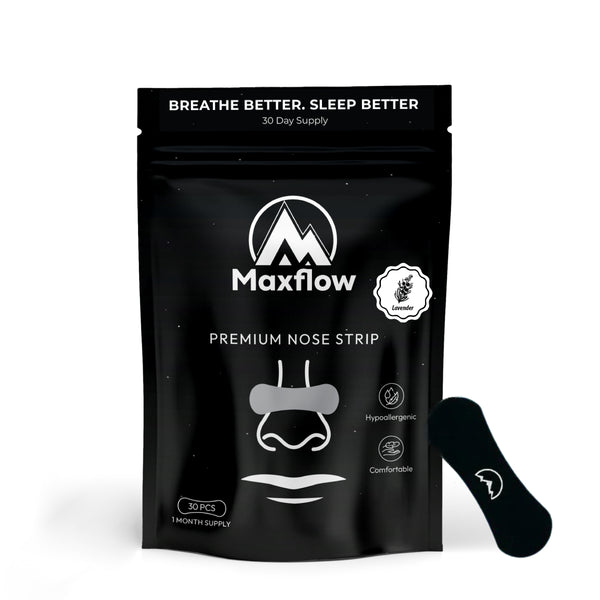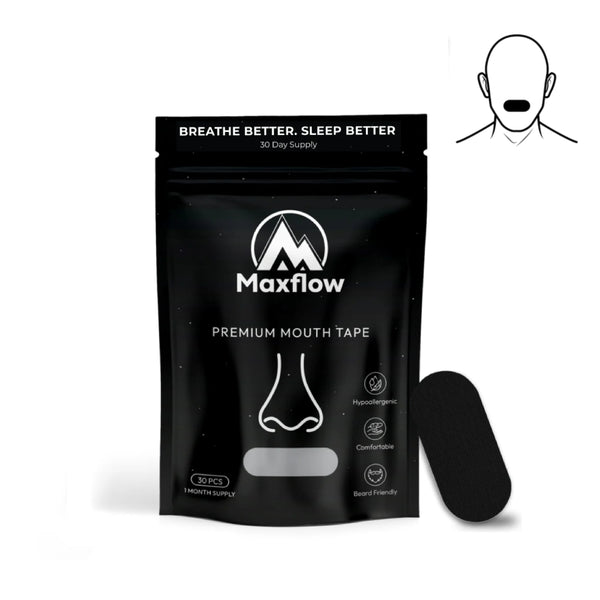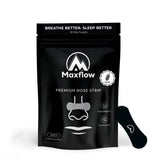

Nasal strips (or nose strips) are one of the simplest things you can try for snoring. But they don't help everyone. Here's how they work, when they're worth trying, and when you need something else.
How nasal strips work
A nasal strip is a thin, flexible band with a spring inside. When you stick it across the bridge of your nose, the spring tries to straighten. That gently lifts the sides of your nose and widens the narrowest part of your airway, an area called the nasal valve.
You can measure the difference. In one study using acoustic rhinometry, which maps the inside of the nose with sound waves, a nasal strip widened the nasal valve from 0.52 to 0.77 cm². (Nigro et al., 2011, reported in Dinardi et al., 2014)
When they help with snoring
The NHS explains that snoring happens when your tongue, mouth, throat or the airways in your nose vibrate as you breathe. For snoring caused by blocked or narrow airways in your nose, the NHS lists strips that hold your nose open while you sleep as a treatment. (NHS: snoring)
So nasal strips are worth trying if:
- your nose often feels stuffy or blocked at night
- you snore more when you have a cold or hay fever
- you find it hard to breathe through your nose when you lie down
Strips reliably open the nose, but their effect on snoring varies from person to person. A 2016 review of 14 studies found nasal dilators improved nasal breathing but didn't improve sleep apnoea. That's why they're best for snoring that starts in your nose. (Camacho et al., Pulmonary Medicine, 2016)
When they won't be enough
If you snore because your mouth falls open while you sleep, a strip on your nose won't keep your lips closed. That's where mouth tape comes in, and many people use both. The NHS also suggests sleeping on your side, not drinking too much alcohol and not smoking.
See a GP if your breathing stops and starts while you sleep, you make gasping, snorting or choking noises, or you always feel very tired during the day. These can be signs of sleep apnoea, which needs proper treatment. (NHS: sleep apnoea)
Nasal strips vs sprays vs dilators
- Nasal strips work on the outside of your nose. There's nothing to put inside your nostrils and nothing to swallow.
- Decongestant sprays shrink swollen tissue inside your nose, but the NHS says not to use them for more than 5 days at a time, because using them for too long can make stuffiness worse. (NHS: decongestants)
- Internal nasal dilators sit inside your nostrils and do a similar job to strips from the inside. How the two types compare.
How to use nasal strips
- Wash and dry your nose, and skip the moisturiser so the strip grips.
- Peel off the backing.
- Centre the strip across the bridge of your nose and press the ends down gently.
- In the morning, peel it off slowly.
Our hypoallergenic nasal strips are latex-free, infused with lavender and stay on for up to 12 hours.