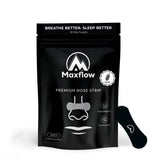

Plenty of runners, cyclists and gym-goers wear nasal strips. So do they actually help? The honest answer: they open your nose, but they won't make you faster.
What a nasal strip does
A nasal strip gently lifts the sides of your nose and widens the nasal valve, the narrowest part of your airway. In one study, a strip widened it from 0.52 to 0.77 cm². (Nigro et al., 2011, reported in Dinardi et al., 2014)
Do nasal strips improve performance?
Not according to the research. A 2021 review pooled the results of 19 studies on nasal strips during exercise. In healthy people, the strips made no significant difference to VO2 max (a measure of fitness), heart rate or how hard the exercise felt. (Dinardi et al., European Archives of Oto-Rhino-Laryngology, 2021)
So why do people wear them?
Mostly for comfort. If your nose often feels stuffy, a strip can make breathing through it feel easier, whether you're out for a gentle run or settling down to sleep. Just don't expect a new personal best.
Tips for wearing a strip when you train
- Wash off any sweat, oil or sun cream, and dry your nose well.
- Put the strip on before you start, while your skin is still dry.
- Press the ends down firmly for a few seconds.
- Afterwards, peel it off slowly.
A quick safety note
A nasal strip isn't a treatment for breathing problems. If you have asthma or get unusually breathless when you exercise, speak to your GP.
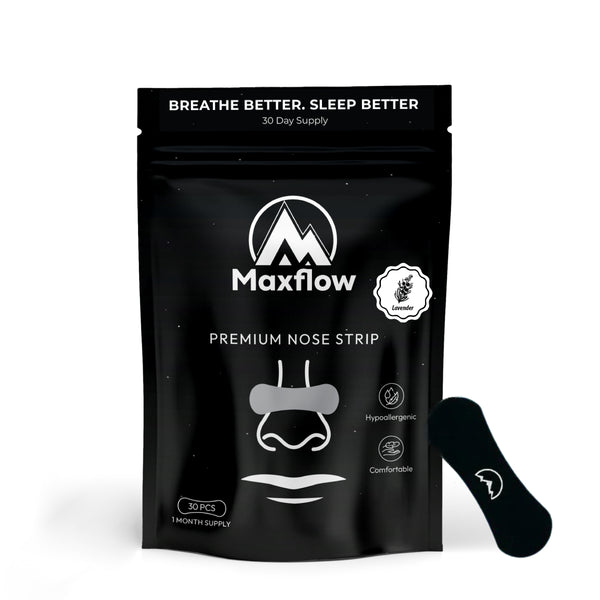
Our hypoallergenic nasal strips use a sweat-resistant adhesive and stay on for up to 12 hours, so the same pack works for training and for sleep.