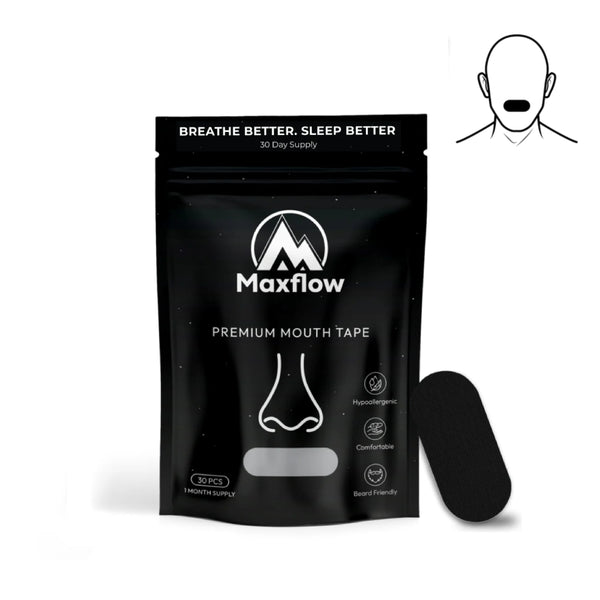
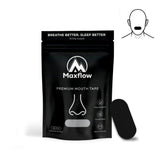

Mouth taping has had a lot of attention lately. The idea is simple: a small strip of gentle tape holds your lips together at night, so you breathe through your nose instead of your mouth. But does it actually work? Here's what the research says, in plain English.
Why nose breathing matters at night
Your nose is built for breathing. Tiny hairs and mucus trap dust and pollen, and the inside of your nose warms and moistens air before it reaches your lungs. Breathe through your mouth all night and that air goes straight in, dry and unfiltered. That's why mouth breathers often wake up with a dry mouth or a scratchy throat.
It may matter for your teeth too. University of Otago researchers measured the mouths of 10 volunteers overnight. When they had to breathe through their mouths, average pH dropped to 6.6, against a neutral 7.0 when they breathed through their noses, and at times it fell as low as 3.6. Tooth enamel starts to break down below 5.5. (University of Otago)
What the research says about snoring
The best-known study so far is a small 2022 pilot study of 20 adults who breathed through their mouths at night. All of them had mild sleep apnoea. With gentle tape over their lips, 13 of the 20 snored at least 50% less. (Lee et al., Healthcare, 2022)
The bigger picture is less clear-cut. A 2025 systematic review brought together 10 studies with 213 people. Two found improvements in sleep apnoea measures; the others found no clear difference. The authors also warned that taping your mouth could be dangerous for anyone whose nose is blocked. (Rhee et al., PLOS ONE, 2025)
So treat mouth tape as promising rather than proven. It's most likely to help if you snore because your mouth falls open. If your snoring comes from a blocked nose, or from your throat, tape on its own won't fix it.
What mouth tape isn't
Mouth tape isn't a treatment for sleep apnoea. The NHS says to see a GP if your breathing stops and starts while you sleep, if you make gasping, snorting or choking noises, or if you always feel very tired during the day. (NHS: sleep apnoea)
Who shouldn't use mouth tape
- Anyone who can't breathe comfortably through their nose, including when you have a cold or a blocked nose
- Children
- Anyone who feels unwell
- Anyone with sleep apnoea or another medical condition, until they've spoken to their GP
How to start
- Try it for a few minutes while you're awake, reading or watching TV, to check you can breathe comfortably through your nose.
- Make sure your lips are clean and dry, then place the tape over relaxed, closed lips.
- Give it a few nights. Most people need a little time to get used to it.
- In the morning, peel it off slowly from one side.
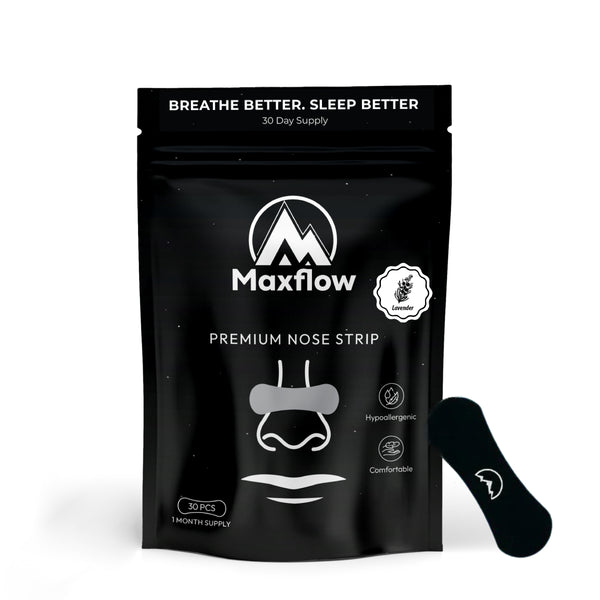
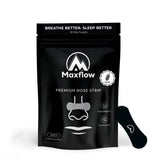
If your nose feels stuffy at night, add nasal strips. They open your nose so breathing through it feels easy, and many people use both together.
The bottom line
For healthy adults who breathe comfortably through their nose, mouth tape is a simple, low-cost way to stay nose breathing at night. The research on snoring is still early: one small study is encouraging, and a 2025 review says more research is needed. Never use it with a blocked nose, and see a GP if you have signs of sleep apnoea.